 EN
EN

Air-Related Challenges Inside Traditional Closed-Storage Environments
Closets represent semi-enclosed micro-environments. Within such semi-closed spaces, static air stands out as one overlooked factor influencing the long-term condition of stored textiles. Solid-board shelving and full-panel cabinet partitions segment closet interiors into many small, poorly-ventilated sub-compartments. Air movement slows down substantially inside those isolated zones. When ambient humidity rises, moisture lingers around folded garments, linen stacks and stored footwear. Over time this situation raises odds of stale odour development and fabric-related deterioration. Many households only notice consequences after visible signs appear. This real-world challenge drives interest in storage-system designs that prioritise natural air exchange as part of core-product architecture, among which wire racks for closets stand out as a widely-adopted option.
Open-Grid Geometry Enables Natural Air Exchange Around Stored Goods
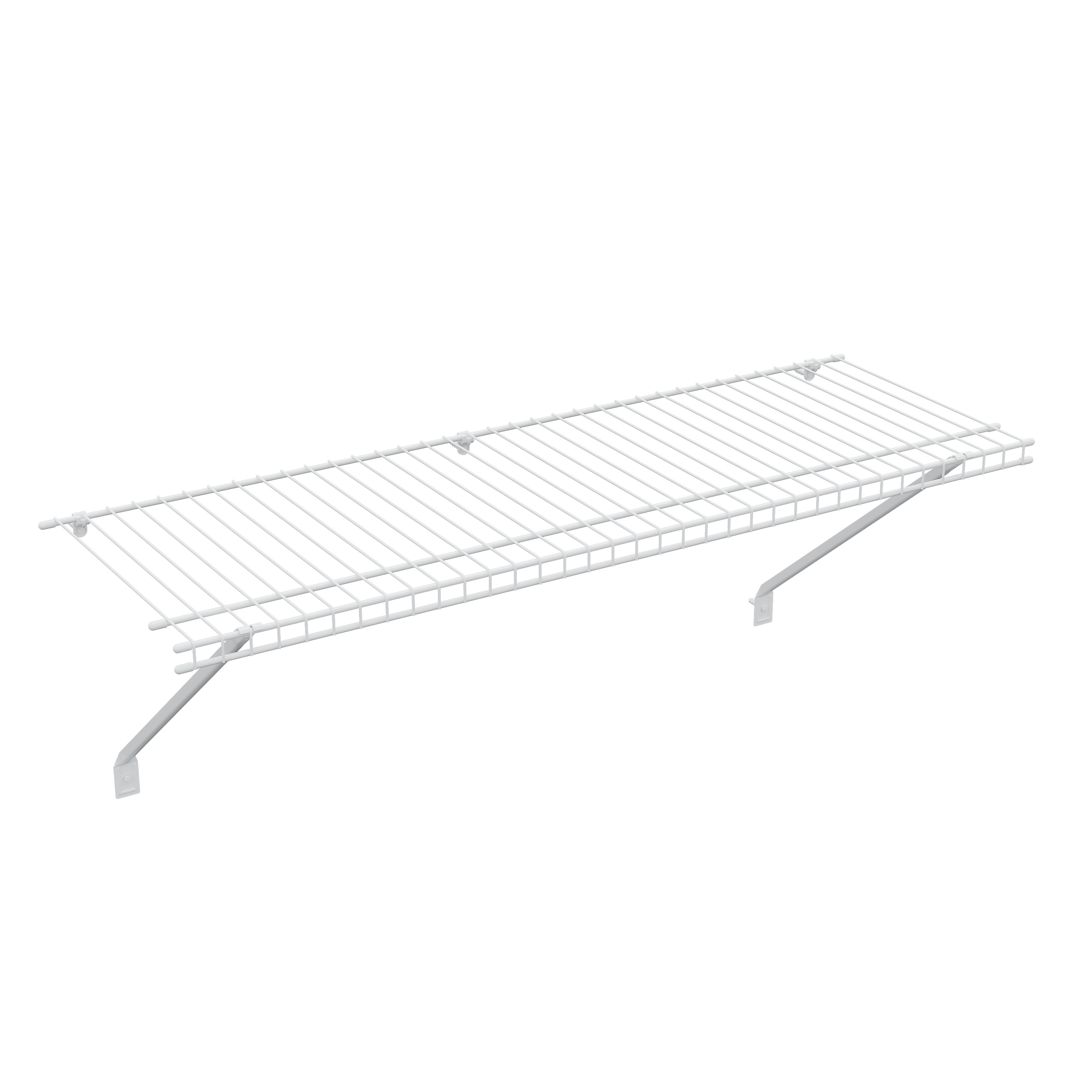
The fundamental reason wire racks for closets deliver improved ventilation lies in their open-grid geometric construction. Unlike continuous solid-material surfaces that block air flow, inter-woven wire creates consistent gaps across the whole storage-support surface. Air can circulate not only above stored items, but also underneath and sideways around every stack of clothing, shoes and textile articles. Guidance documents released by home-care-specialist organisations note continuous gentle air exchange helps reduce moisture accumulation around fabric goods inside semi-closed storage spaces.
Wire racks for closets do not actively blow or process air; they remove physical barriers that would otherwise trap static damp air. In regions with humid seasonal cycles, this passive-ventilation characteristic helps keep stored textiles in more stable condition through high-humidity periods.
Material Durability Working Together With Ventilation Performance
|
Design Factor |
Influence on Wire Closet Rack Performance |
|
Open grid mesh structure |
Realize passive air circulation all round stored goods |
|
Wire material thickness |
Guarantee frame shape under normal household load |
|
Secure welding joints |
Prevent deformation and loose joints under long term service |
|
Anti humidity surface finishing |
Protect base metal against corrosion caused by ambient moisture |
Ventilation advantages would carry limited practical value if supporting hardware could not sustain stable performance through long-term household usage. Wire racks for closets combine open-grid-ventilation design with robust metal-wire material properties. High-quality units use adequately-specified wire gauges together with secure connection points, maintaining framework shape under normal household-storage load. Surface-finishing treatments defend base metal material against ambient-humidity-triggered surface changes. Field observation from residential-storage-upgrade projects shows well-made wire racks retain their form and finish after years in humid-climate households. Ventilation-focused design does not come at the cost of structural solidity. The metal-wire build balances breathable-grid geometry and dependable mechanical performance for everyday-closet deployment.
Compatibility With Diverse Closet-Building Approaches
Wire racks for closets fit into multiple-types of closet-building approaches.
- Install inside complete cabinet shells
- Fit within alcove-style closet spaces
- Serve as major components for walk-in wardrobes
Their open-grid nature does not conflict with other common-closet hardware: hanging rods, drawer modules and accessory holders can co-exist within the same overall-storage scheme. Home-users do not need to rebuild their entire-closet shell to obtain ventilation-related benefits. Existing-closet frameworks can accept wire-rack-style retrofitting. This compatibility means improved air circulation is accessible for end-users with pre-established closet set-ups, rather than only being available for complete-new-build renovation projects.
Manufacturing Standards Supporting Consistent Ventilation-Oriented Hardware
Producing wire racks for closets with reliable passive-ventilation performance demands tight control over mesh-opening consistency. At Hebei Minmetals, forming machinery parameters are calibrated specifically to stabilise mesh gap dimensions. Random sampling checks capture mesh size, wire gauge and joint quality across production runs. This focused in-line inspection workflow prevents inconsistent grid geometry which would weaken natural air-flow properties of finished wire racks.